

Peak sportiness: from the Audi S6 plus to the RS 6 Avant performance and RS 7 Sportback performance
The history of the RS 6 performance models began with the C4 generation Audi S6 plus in 1996. That is when quattro GmbH (now Audi Sport GmbH), initially a supplier of high-quality accessories from 1983 and then tasked with a vehicle customization program starting in 1995, was given a new focus. It took over responsibility for the sporty derivative, internally called the Q1. Following the success of the Audi Avant RS2, the aim was to create a new model with more power and greater driving dynamics. The Audi S6 V8 provided the ideal foundation for this goal.
The ancestor of all high-performance models: the Audi S6 plus
For the S6 plus, Audi’s engine development unit in Neckarsulm developed a more powerful version of the 4.2-liter V8 that powered the regular Audi S6. The engine’s output was increased from 290 to 326 PS, outstripping even the Audi Avant RS2. The car was given larger front brakes, a six-speed transmission with shorter ratios on third gear and up, and stiffer suspension. Both axles boasted 17-inch rims with 255 tires. The interior design was predominately black. The at-the-time quattro GmbH added accents to the gear knob and the speedometer dials in blue, gray, or white, including a scale that went up to 300 km/h (186 mph). With its own booth at the Geneva International Motor Show, quattro GmbH introduced its first vehicle to the public in 1996. During the 15 months that the S6 plus was available, the 855 Avant and 97 Sedans were built.
The RS family tree: From the RS4 Avant and RS 6 Avant to RS 6 Avant plus
Audi established the idea of the sports wagon with the RS2 and S6 plus. The first true RS model from quattro GmbH was the RS4 Avant (B5) from 1999. Compared to the Audi S4, it hit the scene with a widened body and an engine developed in collaboration with Cosworth, which at the time had an impressive output of 381 PS. From the beginning of 2000, the Audi RS4 Avant – advertised and sold as the Audi RS4 and as a special Audi RS4 Sport model – became the new flagship of the Audi A4 B5 series. And as an absolute sales hit, instead of the planned 3,000 units, just over 6,000 Audi RS4 Avant models were purchased by highly enthusiastic and satisfied buyers. There were already plenty of ideas for further high-performance models from quattro GmbH – the phasing out of the RS4 also freed up capacities in Neckarsulm for the development and production of a new model. The year 2002 saw no direct successor come out – the next RS 4 (B7) would not become available until 2005 – instead, the RS 6 represented a kind of “big brother” based on the C5-generation A6.
Along the Sedan and Avant versions of the first RS 6, a new nomenclature also debuted. From now on, all RS models would carry a space in their name. The special limited series RS 6 Avant plus also saw the return of the “plus” performance insignia familiar from the S6 plus. An optimized engine control unit extended the torque curve, resulting in increased power output. Engine power climbed by 30 PS to 480 PS. To ensure optimum cooling of the engine, the cooling system was also updated.
What made it special is that it was the first Audi to officially go faster than 250 km/h (155 mph). quattro GmbH throttled the RS 6 plus to 280 km/h (175 mph), making it the fastest sports wagon at the time. Perforated brake discs, a sports exhaust system, and DRC suspension now came as standard equipment. Nineteen-inch wheels and special paint / interior trim combinations characterized this edition. Audi limited production to 999 Avant units. Stephan Reil, Head of Technical Development at Audi AG in Neckarsulm, recalls: “With 480 PS, the RS 6 Avant plus was at the top of the segment. But on the other hand, that car was to be a wolf in sheep’s clothing that would win people over through understatement.”
More power and torque: “plus” becomes “performance”
The plus variant in the C6 generation hit the market in 2010 and was limited to 500 units. Unlike its predecessor, it did not feature any additional power, with the V10 keep its 580 PS; but it now features a top speed of 303 km (188 mph). The only faster Audi vehicle at the time was the R8. Customers were able to configure the car with two equipment packages:
The RS 6 plus Sport featured leather upholstery on the center console and dashboard, while the RS 6 plus Audi exclusive boasted a paint finish in an individual color according to the customer’s preference. In the Audi exclusive version, the seat covers, controls, door panels, and center armrest were upholstered in one of the attractive colors from the Audi exclusive program. All seat components matched the selected leather color. Both variants were equipped with 20-inch wheels, sport suspension plus, navigation system, and driving assistant, as well as the carbon package for the engine compartment.
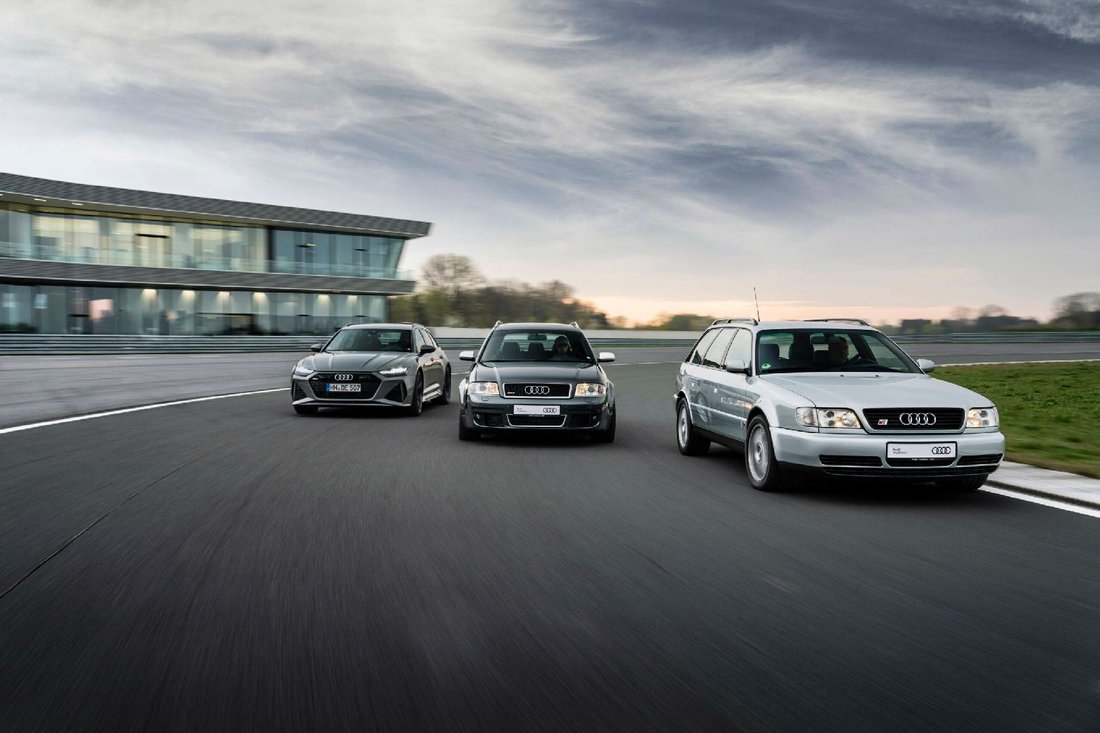
For the C7 generation, “plus” became “performance” – the Audi RS 6 Avant and RS 7 Sportback performance premiered in 2016. With a slightly tweaked engine, the power climbed to 605 PS, 45 PS more than in the base model. The overboost function briefly increased torque to 750 Nm in “dynamic” driving mode. Depending on the equipment, top speed was limited to 250, 280, or 305 km/h (155, 174, or 190 mph). The car did zero to 100 km/h (62 mph) 0.2 seconds faster (3.7 s), and 200 km/h (124 mph) as much as 1.4 seconds faster (12.1 s). Twenty-one-inch wheels now came standard.