
HOW AUDI’S LIGHT DIGITIZATION IS POINTING THE WAY TOWARD THE FUTURE
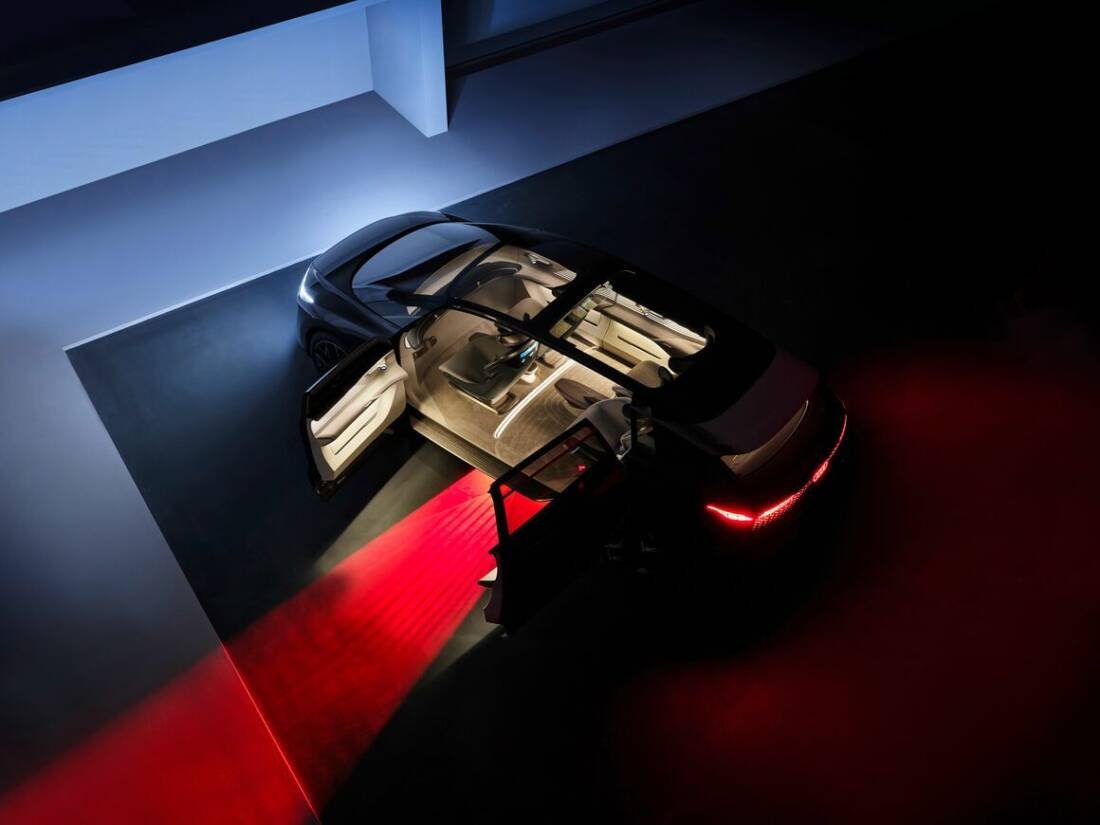
Safety and customer satisfaction come first at Audi. They are part and parcel of the success of the company with the four rings. In that context, light technology is steadily growing more important and creating a wider range of possibilities and perspectives, from added safety for the driver, to external communication and individualization. Systematic light digitization is making all of this possible. It is particularly visible in the new Audi A8: the forward-looking Digital Matrix LED headlights and digital OLED rear lights raise the customer experience to a whole new level: for the first time in any Audi model, light is completely digitized. The car can be individualized even further through its digital OLED rear lights. The Digital Matrix LED headlights also include three new functions: advanced traffic information, a lane light with direction indicator lights on highways, and an orientation light on country roads. These features not only demonstrate Audi’s “Vorsprung durch Technik,” they also add value.
“Lighting technology and lighting design have been success factors for our brand for decades, becoming a key area for Audi. This has allowed us to continue setting new benchmarks in the automotive industry,” explains Oliver Hoffmann, board member for Technical Development. “The digitization of lighting enables us to offer completely new functions that we can use to increase safety again significantly. For example, in combining the digital OLED taillights with proximity indication, we can communicate with the outside world depending on the situation. In addition, this taillight technology enables our customers to select their taillight signature via the MMI for the first time – something that is only available from Audi.”
New number one and number two functions in the Digital Matrix LED: the orientation light on country roads and the lane light with direction indicator lights
We’ve all been there: it’s dark and there is a lot happening on the highway at night. The lane light with the orientation light is extremely helpful in a situation like that. It illuminates the car’s own lane, helping the driver focus on driving events. The integrated position marking from the orientation light – darkened arrows in a kind of “carpet of light” known as the lane light – predictively indicates the Audi vehicle’s position between the lane markers, encouraging safe driving in the center of the lane. With its focus on the car’s own lane markers, the lane light with the orientation light on the highway helps, for example, in narrow lanes around construction sites: the illumination is deliberately restricted to the car’s lane and not the lanes of the construction site in order to optimally center the driver’s focus on the road. Now that the headlight has been digitized, this orientation light is also available independently of the lane light on country roads, which is a new feature. That is the first new function that is made possible in additional driving situations due to digital light technology.
Back to the highway: during lane changes, the lane light brightly illuminates both lane markers, while the orientation light indicates the car’s exact position in the lane to give the driver the most support. That is where the second new function comes into play: the direction indicator lights in the lane light. With the blinkers activated, the Digital Matrix LED headlights create a dynamic blinking area on the appropriate side of the lane light. That way, the lane light reiterates and intensifies the signal from the direction indicator lights on the road in front. This means that additional, clear information about the upcoming lane change goes out to traffic in the immediate vicinity. That is one way that Audi is making driving safer for everyone on the road, particularly in heavy traffic. While driving with low beams through curves, in cities, or on highways and when driving with high beams, the still greater precision that light digitization brings makes driving even safer for other road users because it makes it possible to mask oncoming traffic as well as cars that are on the road ahead far more precisely.
New function number three: advanced traffic information
Despite warnings about possible accidents or breakdowns being already available as images via the MMI via data provided by HERE maps, the Digital Matrix LED headlights, including DMD technology – see the explanation below – offer another level of reliability. Apart from a display in the digital instrument panel, the headlights now project a warning indicator on the road in front of the car for about three seconds. A triangle with an exclamation mark inside it is projected from the steering wheel. This means that the driver can keep looking forward on the road and it enables the fastest response time possible in the event of an accident or breakdown in upcoming traffic.
Good to know: there is a new technology with the acronym DMD behind the digitization of the Matrix LED headlights. That stands for digital micromirror device and it has previously been used in video projectors. At its core, is a small chip with around 1.3 million micromirrors, with edges that are a few thousandths of a millimeter long. Using electrostatic fields, each and every one of them can be angled up to 5,000 times a second. Depending on the setting, the LED light is either directed onto the road via the lenses or absorbed for the purpose of masking. That means the light is not a static beam anymore. Instead, it is like a continuously regenerating video image.